
Fifteen years ago, I stood in a room with a major retailer looking at printouts of hundreds of touchpoints plastered on the walls. This very manual effort visualized a complex omnichannel experience shaped by the decisions and efforts of thousands of stakeholders. Our team brought these stakeholders together to walk through the customer journey, develop a shared perspective on its performance, and identify opportunities for change. This gathering honored everyone’s individual work. More importantly, it helped stakeholders understand their collective ownership of the journey.
Today, we call this type of gathering the practice of journey management. The lift of modeling journeys, organizing and connecting maps, and tying them to data has become a little easier thanks to new platforms. Product has rediscovered discovery. More data exists than ever before to understand customer needs. Service design has exposed many, many stakeholders to best practices for using journeys to identify opportunities and drive change.
Yet, despite this progress, I still hear the same frustrations from leaders and practitioners across industries. Introducing, maturing, and scaling journey management as a practice faces internal friction. Functional OKRs weaken tenuous stakeholder alignment on the trade-offs required to deliver end-to-end experience improvements. Instead of managing journeys, journey management gets watered down to managing maps. It is easy to feel defeated, but we must recognize that this resistance is not a personal failure; it is a structural reality of the complex systems we work within.
To understand this friction, one must view the organization as a “performance engine“.1 Much like a garden planned and nurtured to produce specific crops, a company runs day to day to achieve its outcomes predictably. Consequently, it resists change by design. When we introduce journey management, we don’t deploy a software platform, much less a nice-to-have process. We invite others to take part in a disruptive organizational innovation in how we manage decisions. Like the early days of Agile challenging project management norms or the data analytics revolution forcing marketers to move beyond “gut feelings,” journey management asks the organization to walk the talk of customer-centricity. The organization, as designed, pushes back.
When we introduce journey management, we don’t deploy a software platform, much less a nice-to-have process. We invite others to take part in a disruptive organizational innovation in how we manage decisions.
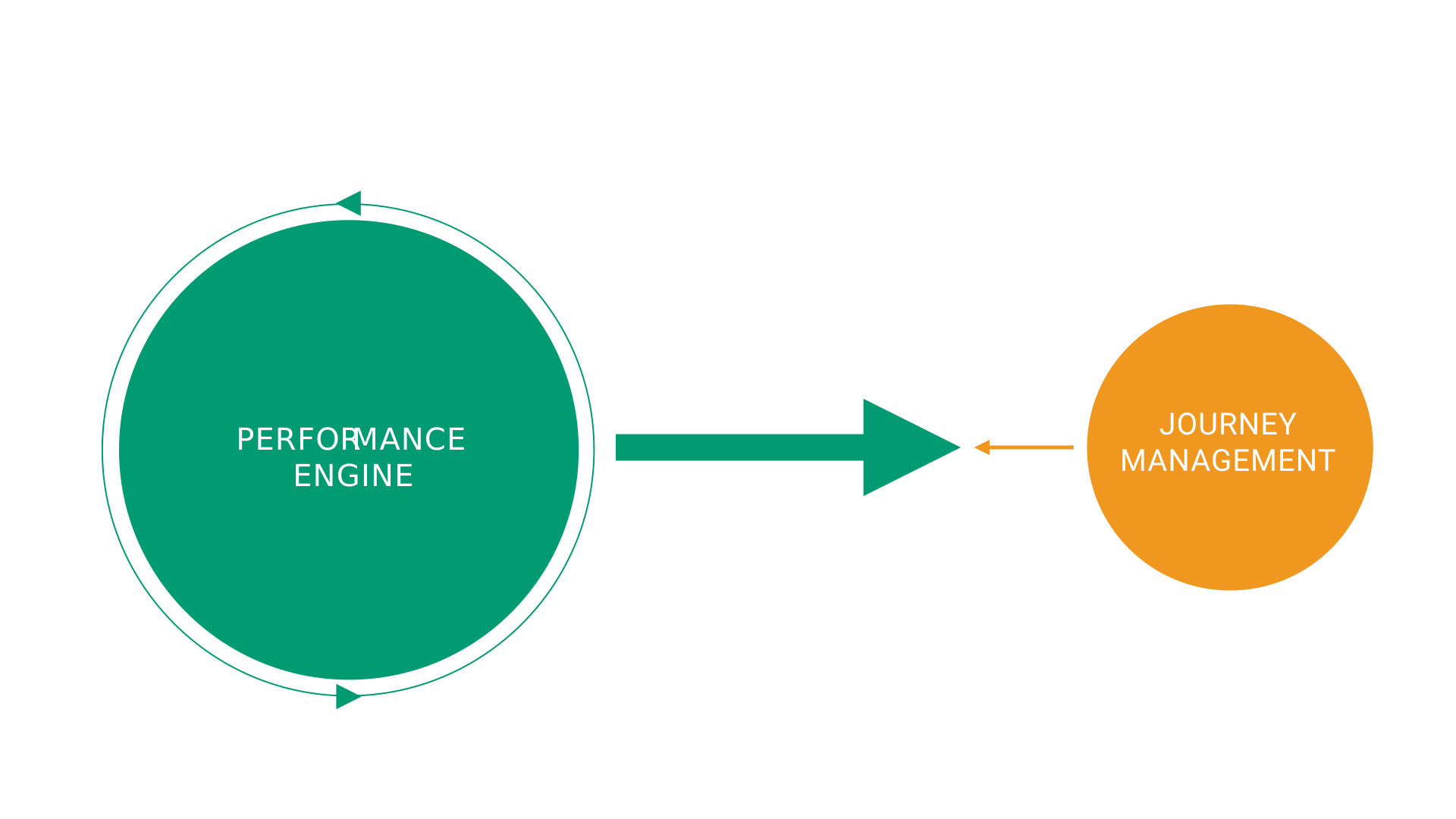
As journey management challenges the status quo logic of decision-making, it inevitably triggers the organization’s “antibodies”. Whether it is the product team protecting their roadmap or finance resisting business cases that span traditional accounting structures, these functional areas push back because the performance engine does its job—it protects the core operation from the chaos of change. Regardless of the intention or logic of our innovation, we must accept that the promise of experience orchestration through journey management disrupts the management practices that hold the organization together today.
These dynamics cannot be ignored, nor do they mean giving up the vision. They require more intentional actions to intervene in the organizational system, tacking towards larger transformation through smaller changes. One cannot simply force journey management to be accepted as is; we must integrate this new practice into the existing machinery.
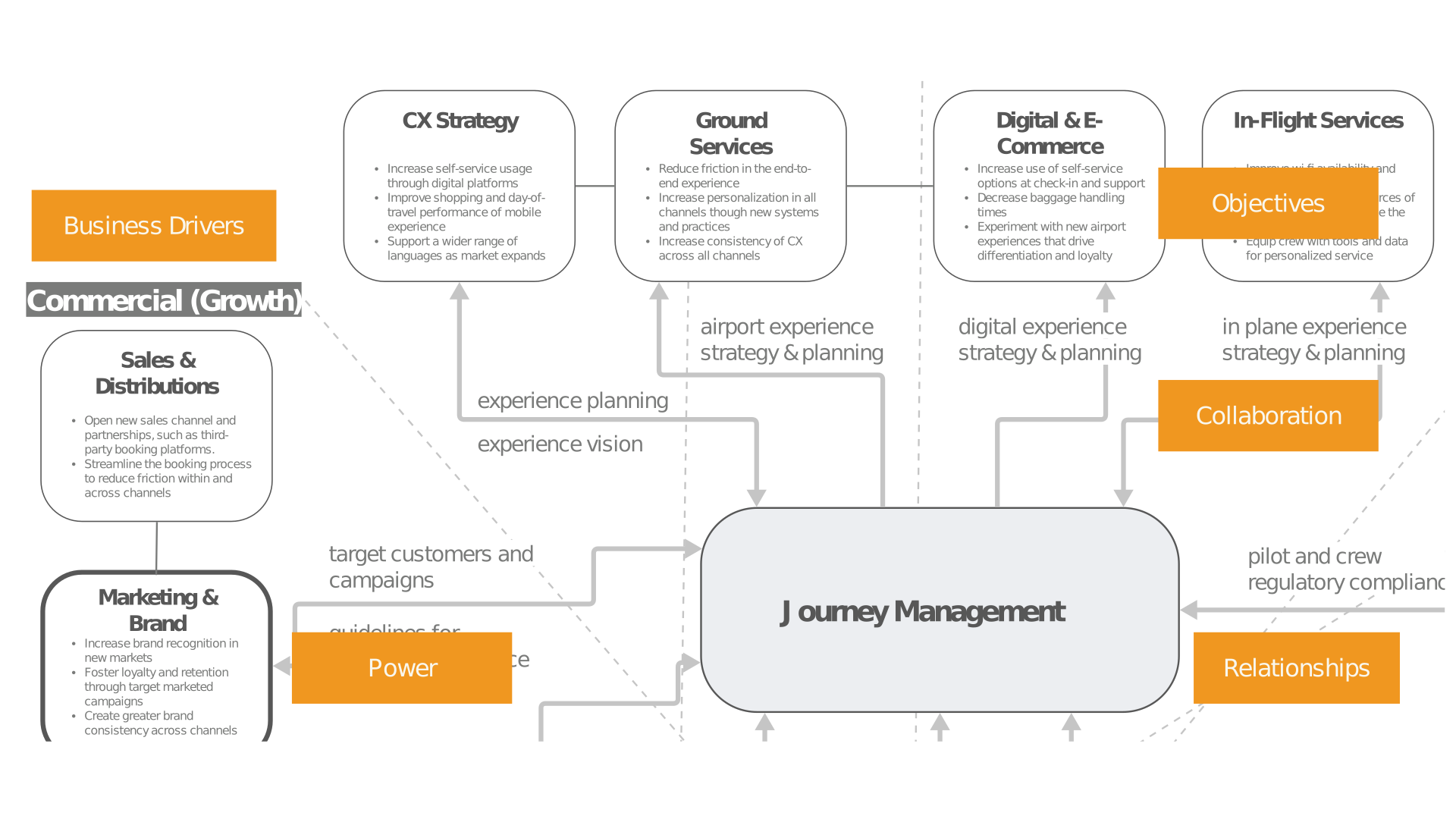
Service Design provides the key. As a participatory change approach, service design turned inward on the organization can reveal the objectives, drivers, power dynamics, and relationships that must evolve to move from managing maps to managing journeys. Making these dynamics more visible provides a tool for creating strategies, experimenting, and learning (see Fig. 2). For example, if we need data and stakeholder participation to scale journey management, we must first show them how journey management helps them win in their specific decision-making moments. One can use a powerful concept from service design—value exchanges—to design how these stakeholders can see “what’s in it for me” while setting the stage for journey management to scale and thrive.
Ultimately, this is a long game. Every organization has a graveyard of transformational tombstones and change agents who left in frustration, seeking greener pastures. Journey management and customer-centricity are not inevitabilities. Don’t take resistance personally; it’s by design and deeply human. View your work as “good trouble,” and approach it with patience, empathy, and resilience as you harmonize with the performance engine in the short term on the way to re-engineering it with a new logic. If you do this—integrate smartly rather than impose aggressively—there will come a day when we won’t even call it “journey management” anymore. It will simply be how the organization works, naturally and intuitively.
Keep up the good trouble. Harmonic and I are here to help.
1 Govindarajan, Vijay, & Trimble, Chris. (2010). The Other Side of Innovation: Solving the Execution Problem.